

Picasso Moth Facts
Have you ever heard of the famous artist Pablo Picasso? There’s a stunning insect named after him called the Picasso moth, and it’s one of the most beautiful moths in the world. Its scientific name is Baorisa hieroglyphica, and its wings look so colorful and artistic that they seem hand‑painted by Picasso himself. This unique moth is known for its bright patterns, bold shapes, and brush‑stroke markings that make it look like a tiny piece of modern art.
Some moths are just as beautiful as butterflies, and the Picasso moth is a perfect example. Its vibrant colors and artistic wing patterns make it stand out in nature. With your parent or caretaker’s permission, search for Baorisa hieroglyphica online and take a look at how breathtaking these moths truly are.
Facts about the Picasso Moth:
1. The Picasso moth lives in Northeast India
and Southeast Asia.
2. There are over 155,000 different species of moths living
all over the world. Here is a list of some of those moths in alphabetical order:
- Atlas moth
- Common clothes moth
- Domestic silk moth
- Japanese silk moth
- Luna moth
- Lymantria dispar moth
- Picasso moth
- Polyphemus moth
- Scarlet tiger moth
- Yellow woolly bear moth
3. The Picasso moth is a nocturnal insect. It is usually most active at night and rests during the day. It does almost all of its traveling at night.
4. The Picasso moth feeds mainly on the nectar from
different plants. They are herbivores. Picasso moths are pollinators. A
pollinator can be any insect that carries pollen from one flower/plant to
another.
5. The Picasso moth has four wings. The two top wings are
called the forewings, and the bottom two wings are called the hindwings. When
the Picasso moth's wings are folded up, they resemble the shape of an isosceles
triangle.
6. You can buy a Picasso moth sculpture on Etsy. They are
very well-done replicas of the beautiful Picasso moth.
7. The Baorisa hieroglyphica (Picasso moth) was described in a catalog of Asian butterflies and moths made by a British entomologist named Frederic Moore in 1882.
🎨 Picasso Moth “Painted Wings” Art Activity
A creative craft that teaches kids about patterns, symmetry, and nature-as-art.
Quick Takeaway
Kids create their own Picasso Moth using bold colors, abstract shapes, and “artistic” wing patterns inspired by the real moth’s modern‑art look. It’s simple, low‑prep, and works beautifully for preschool through early elementary.
🦋 Materials
White cardstock or construction paper
Washable paints or markers
Black fine-tip marker
Scissors
Glue stick
Optional: googly eyes, glitter, Q‑tips for paint dabs
🖼️ Step-by-Step Instructions
Fold the paper in half This helps kids create symmetrical wings just like real moths.
Draw a simple moth outline A rounded body in the center and two large wings on each side. (You can offer a printable outline on your blog if you want.)
Add “Picasso-style” shapes Encourage kids to fill each wing with:
Bright yellow patches
Coral or pink dots
Thin black lines
Random geometric shapes (triangles, circles, squiggles) Tell them: “Make it look like a painting!”
Paint or color the shapes Let them use bold, contrasting colors. Q‑tips make great tiny paint dabs.
Outline with black marker This mimics the moth’s crisp, artistic wing lines.
Cut out the moth Kids love this part — it makes the artwork feel “real.”
Add finishing touches
Googly eyes
Glitter accents
A fun background (forest, night sky, abstract shapes)
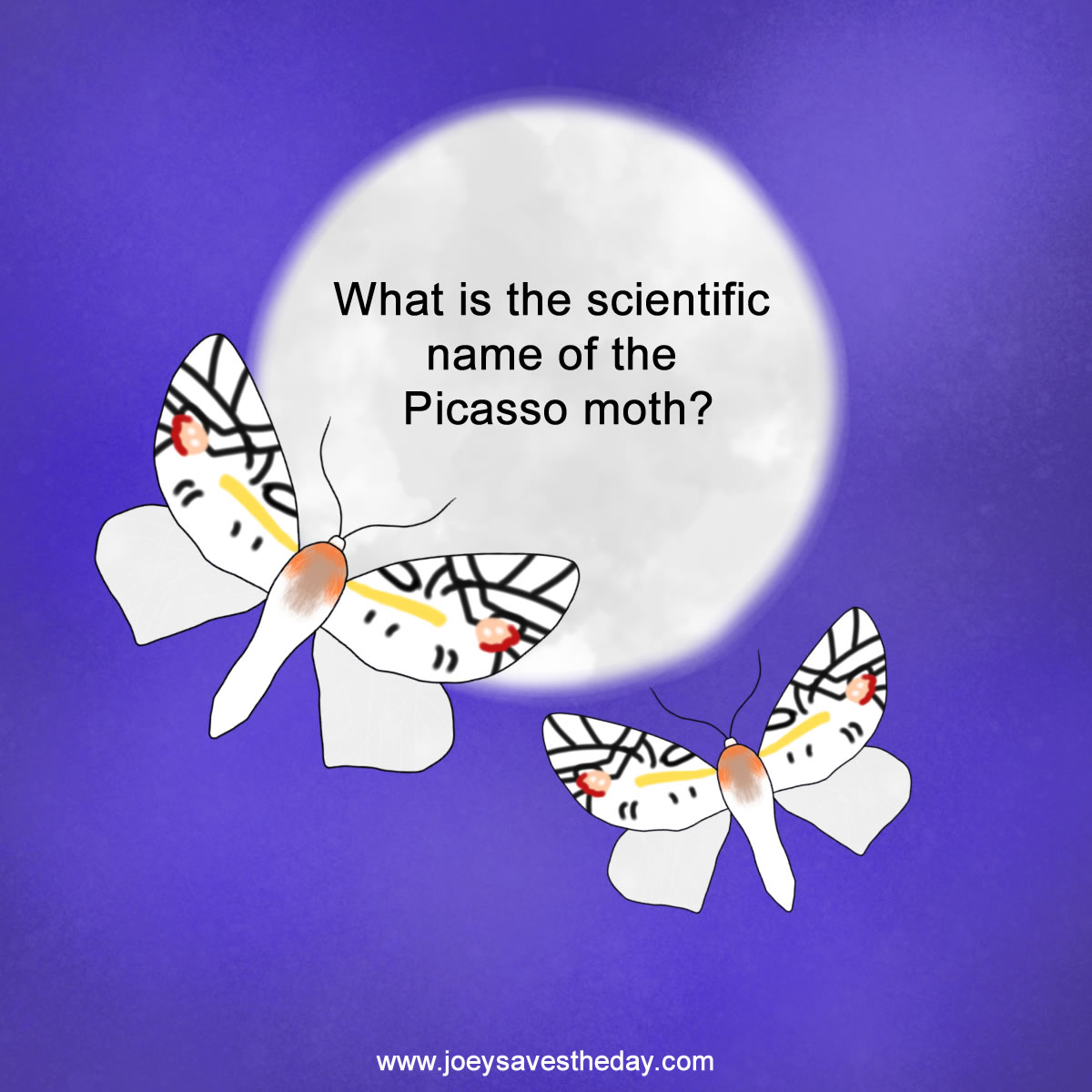
The Picasso moth is like a tiny painting flying through nature. Its bright colors and cool patterns make it one of the most beautiful moths in the world. If you want to see how amazing it looks, ask a parent or caretaker to help you look up Baorisa hieroglyphica online. Keep exploring fun insects... you never know what other little masterpieces you’ll discover.
What’s the strangest insect you’ve ever seen? Tell us in the comments!
Get your free printable Picasso moth worksheet here:
Visit my printables section for a wide selection of
worksheets and coloring sheets!
Books about Picasso moths:
1. Moth An Evolution Story by Isabel Thomas
2. Moths: A Complete Guide to Biology and Behavior by David
Lees
3. The Lives of Moths: A Natural History of Our Planet's
Moth Life by Andrei Sourakov
4. Smithsonian Handbooks: BUTTERFLIES AND MOTHS by David J.
Carter
Parents/caretakers, be sure books are child-friendly before
reading them to your child/children.
Thank you for reading my post!! Don’t forget that "One small positive thought can change your whole day."-Zig Ziglar
Check these free printables out:
http://www.joeysavestheday.com/p/printables.html
Follow me on Instagram:
https://www.instagram.com/mimijoey444/
Like and follow my author page:
https://www.facebook.com/Mimi-Jones-114739544135886
Mimi is the author of the “Joey Saves the Day!” series, the State Facts for Kids series, The Wonderful World Of… series, and The Wonderful World of Zodiacs. She creates fun, educational content for children and works alongside her talented teen daughter, who illustrates all of their books. Together, they inspire young readers to learn, imagine, and explore the world around them.
.jpg)


No comments:
Post a Comment