

Sea Bunny Facts
Have you ever heard about Sea Bunnies before? A Sea Bunny is actually a sea slug/snail. The sea bunnies, known for their diminutive size and various colors ranging from white to brown, yellow, and even green, were first documented by Kikutaro Baba, a renowned Japanese malacologist specializing in the study of mollusks. These captivating creatures primarily inhabit the waters of the Indian Ocean and the central Pacific Ocean, with a notable concentration found along the coast of Japan. If you want to know more about Sea Bunnies, just keep reading.
With your parent/caretaker’s permission, you can click on the
link below to see some pictures of Sea Bunnies: CLICK HERE.
Quick facts about Sea Bunnies:
1. The scientific name of the adorable and fluffy sea slug, commonly known as the sea bunny, is Jorunna parva.
2. Do Sea Bunnies have eyes? Sea Bunnies do not have eyes, so they can't see. Instead, they use the two little things that look like cute bunny ears, which are actually rhinophores, to navigate the ocean. The rhinophores function like tentacles, helping the Sea Bunnies find their way and locate food.
3. The Sea Bunny, a type of sea slug, may resemble a furry bunny, but its "fur" is made up of tiny, bristle-like structures called caryophyllidia. These caryophyllidia are the reason behind the Sea Bunny's furry and speckled appearance, giving it a truly unique and intriguing look.
To read
more about caryophyllidia, CLICK HERE.
4. These captivating creatures have the potential to reach a maximum length of one inch, although most are typically less than an inch in size.
5. The sea bunny has a relatively short lifespan, typically living for up to one year in the wild. This fascinating marine creature is captivating because of its unique appearance and relatively brief existence.
6. The adorable Sea Bunny sustains itself primarily by feeding on sea sponges. However, it also complements its diet with algae and seagrass, making it a versatile eater in its underwater habitat.
7. Sea Bunnies, known for their cute appearance, are equipped with a potent defense mechanism: toxicity. This toxicity is a deterrent to ocean predators attempting to prey on them.
8. The Sea Bunny is adorned with fascinating gills on its posterior that remarkably resemble bunnies' tails. These specialized gills provide the Sea Bunny with the necessary oxygen for respiration, allowing it to thrive in its marine environment.

🐰🌊 More Cute & Fun Sea Bunny Facts
Sea bunnies aren’t actually bunnies — they’re tiny sea slugs that look fluffy and rabbit‑like.
Their “ears” are really rhinophores, which help them smell chemicals in the water.
Sea bunnies are super tiny — most are only about 1 inch long.
Their fluffy appearance comes from tiny bumps on their bodies called papillae.
Sea bunnies live in warm ocean waters, especially around Japan, the Philippines, and Indonesia.
They move slowly, but their little “ears” wiggle as they explore the ocean floor.
Sea bunnies can be white, yellow, or spotted, making them look like tiny underwater marshmallows.
They belong to a group called nudibranchs, which are some of the most colorful animals in the ocean.
Sea bunnies don’t have eyes like we do — they use their senses to feel and detect their surroundings.
Even though they look cute and cuddly, sea bunnies are not safe to touch in the wild because some nudibranchs can be toxic.
🌊🐰 Wrap‑Up
Sea bunnies may be tiny, but they’re full of charm, curiosity, and ocean magic. Learning about these fluffy little sea slugs reminds us just how many amazing creatures live beneath the waves. Whether you’re exploring ocean animals with your kids, students, or just for fun, sea bunnies are a wonderful reminder that the ocean is full of surprises waiting to be discovered.
What ocean creature is your favorite to learn about? Comment it below — I’d love to hear your pick!
🐰🌊 Sea Bunny Craft: Make Your Own Adorable Sea Bunny!
Sea bunnies (Jorunna parva) are tiny, fluffy-looking sea slugs that look just like underwater rabbits. This easy craft lets kids create their own sea bunny while learning a fun ocean fact or two.
Materials
White or pastel pom‑poms (large + small)
Black pipe cleaners
Googly eyes (optional)
Glue
Blue construction paper
Crayons or markers
Optional: glitter, sequins, ocean stickers
Instructions
1. Make the Sea Bunny Body
Glue one large pom‑pom to the blue construction paper. This is the sea bunny’s fluffy body.
2. Add the “ears” (rhinophores)
Cut two tiny pieces of black pipe cleaner and bend them slightly. Glue them on top of the pom‑pom to look like bunny ears. (Explain that real sea bunnies use these to “smell” chemicals in the water!)
3. Add the tail (gill tuft)
Glue a small pom‑pom to the back of the body. This represents the sea bunny’s feathery gills.
4. Decorate the ocean background
Let kids draw seaweed, bubbles, coral, or tiny fish around their sea bunny. They can also add glitter or stickers to make it look magical.
5. Write a Fun Fact
At the bottom of the page, have kids write: “Sea bunnies are tiny sea slugs that live in warm ocean waters.”
Get your free printable Sea Bunny coloring sheet here:
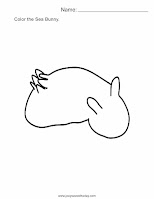
Visit my printables section for a wide selection of worksheets and coloring sheets!
Books about Sea Bunnies:
1. The Mysterious Sea Bunny by Peter Raymundo
2. Sea Bunnies: Jumbo Coloring Book by Michele Collins
3. Science Behind the Colors Sea Slugs by Alicia Z. Klepeis
4. Sea Bunnies by Kelly Hargrave
Parents/caretakers, be sure books are child-friendly before
reading them to your child/children.
Short story alert:
🐰🌊 Fluffy the Sea Bunny
Once upon a time, a tiny, fluffy Sea Bunny slowly roamed across the ocean floor in search of her favorite snack. All her Sea Bunny friends called her Fluffy. She was soft and white with little black speckles sprinkled across her body, making her one of the prettiest Sea Bunnies in the reef.
Fluffy didn’t have eyes like other animals, so she used her rhinophores, the cute bunny‑ear shaped feelers on her head, to sense the world around her. Her whole body was covered in tiny bumps called caryophyllidia, which helped her feel the water and find her way.
Fluffy loved sea sponges more than anything. Whenever she found a fresh one, she wiggled her rhinophores happily and enjoyed a big, delicious meal. After she finished eating, she curled up for a cozy rest on the soft ocean sand. When she woke up, she continued her slow, peaceful journey to find more tasty sponges.
And so Fluffy spent her days exploring, nibbling, and enjoying her beautiful underwater home.
The end.
Thank you for reading my post!! “The more that
you read, the more things you will know. The more you learn, the more
places you’ll go.” -Dr. Seuss
Check these free printables out:
http://www.joeysavestheday.com/p/printables.html
Follow me on Instagram:
https://www.instagram.com/mimijoey444/
Like and follow my author page:
https://www.facebook.com/Mimi-Jones-114739544135886
Mimi is a talented author known for creating the beloved JOEY SAVES THE DAY! book series and other captivating titles. Her work shows her passion for learning, reading, drawing, and writing. As a dedicated homeschooling mother of two, she brings a unique perspective to her writing. In addition, Mimi has two grown children who have embarked on their own life adventures.
.jpg)


No comments:
Post a Comment